Egg Freezing and Fertility Preservation: Everything You Need to Know
If you could pause your biological clock for a while to decide to become a mother with more peace of mind in the future, would you pass up this opportunity? Fortunately, egg freezing is a practical and reliable solution to this need. In this method, after going through specific medical steps, a specialist doctor removes several healthy eggs from the ovaries and freezes them at a very low temperature. Frozen eggs can be stored for years without a loss in quality and can be used in the future to create an embryo through in vitro fertilization (IVF).

Many women delay the decision to have children due to reasons such as focusing on their career path, not having a suitable partner, or having specific medical conditions. However, prolonged delays can increase the risk of infertility at higher ages. Egg freezing, as an effective solution, allows women to preserve their fertility and plan for the future with more peace of mind. This is why the demand for egg freezing for fertility preservation is growing among women around the world. In recent years, Iran has become one of the reliable destinations for egg freezing due to significant advancements in assisted reproductive technologies and the high quality of treatment centers. In the following sections of this article, we will examine the egg freezing process, its benefits, the steps involved, and the associated costs in Iran in detail.
Oocyte cryopreservation (egg freezing)
Oocyte cryopreservation (egg freezing) is an advanced method for preserving female fertility, in which some healthy eggs are retrieved from the ovaries and stored at a very low temperature to be used in the future for embryo formation and eventually pregnancy. This technique helps women to pause the natural decline in the quality and quantity of their eggs and increase their chances of pregnancy at older ages.
In the first stage, the ovaries are stimulated with hormone medications to produce multiple mature eggs instead of one. Then, the egg retrieval is performed on an outpatient basis with mild anesthesia. The retrieved eggs are immediately frozen and stored at a temperature of -196°C.
In the future, when the individual decides to become pregnant, the frozen eggs are thawed and combined with sperm in the laboratory to form embryos. After embryo development, they are transferred to the mother’s uterus.
Difference Between Egg Freezing and Embryo Freezing
Egg freezing is one of the main methods in the field of fertility preservation and is performed with the aim of storing reproductive cells and tissues for future use. For women, the most common methods include egg freezing, embryo freezing, and ovarian tissue freezing; while for men, sperm freezing is considered the standard method.
The main difference between egg freezing and embryo freezing lies in the fertilization stage:
- In egg freezing, the cells are frozen in an unfertilized state.
- In embryo freezing, the eggs that have been fertilized with sperm are frozen.
Since embryos are less sensitive than unfertilized eggs, the success rate of embryo freezing is generally higher. However, many women prefer egg freezing because it does not require having a partner or a sperm donor at the time of the procedure, offering more freedom for future decision-making.
Who should consider egg freezing?

Egg freezing can be a smart choice for women who want to preserve their fertility chances in the future. This method can be beneficial for the following groups:
-
Women who delay pregnancy for personal reasons
Many women prefer to become mothers later due to career plans, educational goals, or life circumstances. Egg freezing helps them plan for the future without worrying about the decline in the quality or quantity of their eggs.
-
Individuals with conditions such as endometriosis or cancer
Women who are at risk of reduced fertility due to medical conditions or treatments like chemotherapy can preserve the possibility of pregnancy in the future through egg freezing.
-
Couples who are not yet ready to become parents
Even after marriage, you may decide not to have children for financial, emotional, or lifestyle reasons. Egg freezing allows you to postpone pregnancy with peace of mind.
-
Women with a family history of early menopause
If someone in your family has experienced early menopause, egg freezing can be a preventive solution to preserve the chance of pregnancy in the future.
The ideal age for egg freezing
The ideal age for egg freezing is generally before the age of 35, when the quality and quantity of eggs are still in a favorable condition. Many specialists consider the late 20s to early 30s as the most optimal period for this procedure.
Of course, each individual’s situation is different. If you have conditions that may affect fertility, such as endometriosis, hormonal issues, or need treatments like chemotherapy, it is better to consider egg freezing earlier.
Egg freezing can still be a viable option for women aged 35 to 40, provided it is done with careful planning and realistic expectations. This procedure is generally not recommended for women over 40, as the success rate significantly decreases with age. However, in some special circumstances, a doctor may evaluate the possibility of proceeding with it.
Step-by -Step of Egg Freezing (Vitrification)
Egg freezing is a multi-step process that typically takes 2 to 3 weeks to complete. Understanding these steps can help you plan with a clearer and calmer mindset.
1- Initial consultation and evaluation
The first step involves an IVF specialist evaluating your general health and ordering blood tests and an ultrasound (of the uterus and ovaries) to assess hormone levels and ovarian status. These evaluations help determine ovarian reserve and plan the egg freezing process more precisely.
2-Ovarian Stimulation
Since the body usually releases only one egg per menstrual cycle, hormonal medications are used to stimulate the production of multiple mature eggs. These medications may be injectable or oral and typically include the following:
- Birth control pills: These help regulate the menstrual cycle and increase the chances of having high-quality eggs.
- Gonadotropins: Injectable medications that stimulate the ovaries to produce multiple eggs at once.
- GnRH agonists: These medications control premature ovulation so the doctor can precisely time the egg retrieval.
- hCG hormone: Injected about 36 hours before egg retrieval to mature the eggs for final collection.
3-Egg Retrieval
This step is a short outpatient procedure that usually takes 10 to 20 minutes and does not require hospitalization. For comfort and to prevent pain, a mild sedation or anesthesia is typically used.
During the egg retrieval process, the doctor uses a transvaginal ultrasound to guide a very fine needle through the vaginal wall into the ovaries. The fluid from the follicles (which contain the eggs) is then suctioned out and placed in special laboratory tubes.
4-Egg Freezing
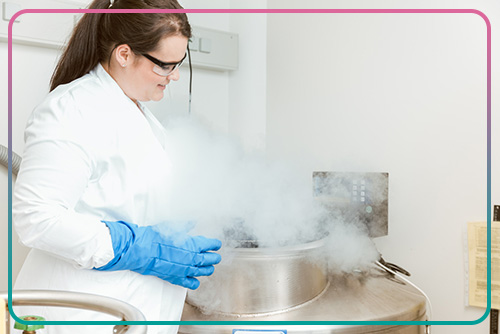
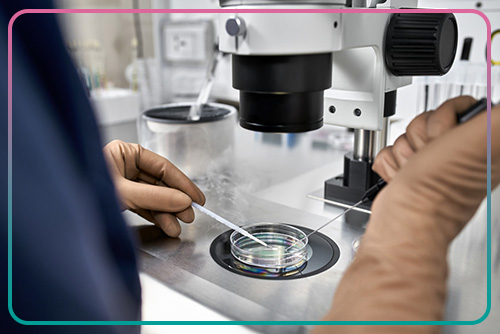
After retrieval, the eggs are sent to the embryology lab. The embryologist examines them under a microscope to confirm their maturity and quality for future fertilization. In the freezing step, a technique called vitrification is used; this method rapidly freezes the eggs and prevents the formation of ice crystals that could damage the DNA. This is one of the safest and most effective methods for egg freezing.
5-Egg Storage
In the final step, the frozen eggs are stored in liquid nitrogen tanks at a temperature of about -196°C. Reputable labs use advanced temperature monitoring systems and alarm devices to ensure the storage conditions are always stable and the health and quality of the eggs are fully preserved.
How long can frozen eggs be stored?
Frozen eggs can be stored for many years without a significant loss in quality. In most countries and clinics, the standard storage period is up to 10 years. However, some clinics may allow longer storage periods depending on national regulations or individual circumstances.
The exact duration for which eggs can be legally stored varies by country and is determined by local laws, medical guidelines, and the clinic’s policies. With proper storage conditions, frozen eggs can remain viable and usable for future fertility treatments such as IVF.
Success rates and what to expect
Egg freezing is an effective method for preserving fertility, but it’s important to have realistic expectations regarding its success. Generally, based on scientific studies, the chance of pregnancy from each frozen egg is estimated to be between 4 and 12 percent. Therefore, the number and quality of the eggs play a key role in the outcome.
The highest success rates are seen in women who freeze their eggs before the age of 35. According to a reputable study, if a woman freezes 20 eggs before the age of 35, there is about a 95% chance of having at least one live birth. In contrast, for women who freeze only 8 eggs at an older age, this chance drops to around 18%.
Therefore, the age at the time of egg freezing and the number of eggs retrieved are two very important factors in determining the success rate and the possibility of achieving pregnancy.
What factors affect the success of egg freezing?
The success of egg freezing depends on a combination of factors related to the individual’s health and the quality of the fertility center’s services. The most important factors are:
● Age:
A woman’s age at the time of egg retrieval is the most important determining factor. As age increases, both the quality and quantity of eggs decrease; therefore, egg freezing at a younger age offers a significantly higher chance of success.
● Clinic Technology and Equipment:
Fertility centers and hospitals that use advanced technologies and global standards minimize the risk of egg damage and ensure the quality of freezing and storage.
● Embryologist Experience:
The skill and experience of the laboratory team, especially the embryologist, in identifying mature eggs, performing the vitrification process, and maintaining sample quality, have a direct impact on the outcome.
● Lifestyle:
Maintaining a healthy diet, avoiding smoking and alcohol, managing stress, and having a balanced lifestyle can improve egg quality and increase the chances of successful fertilization and implantation.
Why is Iran the best option for egg freezing?
Iran has become one of the leading destinations for fertility treatments in the region and even globally, thanks to remarkable advancements in assisted reproductive technologies and the development of well-equipped clinics. Many individuals seeking fertility services abroad consider Iran as an ideal choice.
The main advantages of egg freezing in Iran are:
● Advanced technologies in line with global standards
Fertility clinics in Iran use modern equipment and up-to-date global methods such as vitrification, which enhance the safety and efficiency of the process.
● Cost-effective treatment costs
Compared to many other countries, Iran offers high-quality fertility services at significantly lower costs.
● Specialized and experienced medical teams
Iranian doctors, with their specialized education, international experience, and high scientific skills, are among the key strengths in this field.
● Personalized services with privacy protection
Clinics place great emphasis on the comfort and mental security of patients, providing emotional support and accurate guidance throughout the treatment process.
● Complete medical tourism packages
Reputable centers offer services such as accommodation, interpreters, transfers, and full treatment coordination to provide a comfortable and stress-free experience for international patients.
Egg Freezing in Iran: A Trusted Destination for International Patients
Iran has been performing assisted reproductive procedures, including egg freezing, for over two decades, and its fertility sector has grown into one of the most developed in the Middle East. Tehran’s leading hospitals operate dedicated IVF and embryology units equipped with vitrification technology that meets international standards, the same technique used in top clinics in Europe and North America. Unlike many neighboring countries where fertility regulations are still evolving, Iran has a clear and well-established legal framework governing egg freezing and storage, which means patients can undergo the procedure with full legal protection and without ambiguity about how their frozen eggs are held and managed.
What makes egg freezing in Iran particularly appealing for international patients is the combination of clinical quality and practical accessibility. Many women traveling from Iraq, Pakistan, Oman, and other countries in the region find that the entire process, from the initial hormone stimulation phase to egg retrieval and freezing, can be completed within two to three weeks, making it feasible to plan as a dedicated medical trip. Clinics that work with international patients typically provide coordination support, including appointment scheduling, medical translation, and guidance on accommodation, so patients aren’t navigating the process alone. Add to this the significantly lower cost compared to Western Europe or the Gulf states, and it becomes clear why Iran is increasingly the first choice for women who want high-quality fertility preservation without the financial burden that often comes with it.
Egg Freezing Cost in Iran: Affordable and Transparent
One of the main reasons for choosing Iran for medical services is the appropriate and transparent cost of the treatments. While the cost of one cycle of egg freezing in the US or European countries is about $10,000 to $15,000, and in the UAE it is $6,500 to $9,000, the same services are offered in Iran at a much lower cost.
In Iran, the cost of one cycle of egg freezing ranges between $2,000 to $3,500. This amount varies depending on the treatment center, the doctor’s expertise, and the quality of services. However, it usually includes the following:
- Consultation and counseling
- Medications
- Necessary tests
- Egg retrieval procedure
- Egg freezing
- Storage of eggs for one year
High-quality services and compassionate care
One of the outstanding features of Iranian clinics and hospitals is their simultaneous attention to both the scientific and human aspects of treatment. This ensures that patients have a better experience throughout the treatment process. The medical teams patiently explain all the steps, listen to patients’ concerns and worries, strictly respect their privacy, and understand the cultural sensitivities of international patients.
This approach helps individuals feel more comfortable, secure, and confident during the egg freezing process.
The Emotional Aspect of Egg Freezing: Control of the Future is in Your Hands
To freeze your eggs is not just a medical step; it’s a move that can give you a greater sense of control and empowerment over your life path and future planning. With this choice, you can determine the timing of motherhood according to your personal readiness and circumstances, preserving the opportunity for parenthood in the future without the pressure of time.
It’s natural for the egg freezing journey to come with emotions such as anxiety, hope, and uncertainty, but at the same time, it can bring a sense of strength, calm, and reassurance. Don’t forget, you are not giving up on motherhood; you’re simply adjusting its timing with awareness and choice.
Risks, Limitations, and Important Notes of Egg Freezing
Although egg freezing is considered a safe method for preserving fertility, like any medical intervention, it is not completely risk-free. In very rare cases (less than 1 percent), complications such as bleeding, infection, or damage to surrounding pelvic organs may occur.
One of the potential side effects of egg freezing is Ovarian Hyperstimulation Syndrome (OHSS), which occurs in less than 5 percent of individuals. This condition happens when the ovaries swell excessively in response to hormone medications, causing fluid to leak into the abdominal cavity. Women under 35 and those with Polycystic Ovary Syndrome (PCOS) are at higher risk for this complication.
Hormonal medications may also cause mild and temporary side effects, including:
- Mood swings
- Bloating
- Headaches
- Nausea
Although egg freezing can increase the chances of pregnancy, it does not guarantee it, because not all eggs remain healthy after thawing or necessarily become fertilized after sperm injection. On average, about 80% of eggs successfully go through the thawing stage, and the chance of each egg resulting in a live birth ranges between 2% and 12%.
In addition to the physical aspects, emotional and psychological considerations should not be overlooked. The egg freezing process can be stressful, and hormonal medications may intensify these feelings. Utilizing methods such as yoga, meditation, or psychological counseling can help manage stress and maintain mental well-being.
Is Egg Freezing Right for You?

Egg freezing can be a suitable option for you depending on your lifestyle, plans, and health condition. This method may be a good choice for women who plan to delay pregnancy or who, due to specific medical issues, are at risk of reduced fertility or infertility.
Deciding on egg freezing is a completely personal matter. Consulting with a fertility specialist is very important for making an informed choice. During the consultation, the doctor will evaluate your general health, request the necessary tests to assess ovarian function and ovarian reserve levels, and, based on the results, estimate the likelihood of success with egg freezing for you. They will also explain in detail all the treatment steps, benefits, limitations, and ways to reduce potential side effects so you can make a calm and confident decision.
How can I prepare for egg freezing?
Physical and mental preparation play an important role in increasing the chances
of success in egg freezing. Below are the most important steps that can help you prepare for this process:
- Healthy diet: Consume healthy foods, especially whole grains, fruits, vegetables, and low-fat proteins. The Mediterranean diet is also recommended to improve fertility health.
- Reduce caffeine intake: Limit your caffeine consumption to a maximum of 200 milligrams per day, equivalent to 1 to 2 cups of coffee.
- Maintaining a healthy weight: Being underweight or overweight can affect your menstrual cycle and the ovulation process.
- Regular exercise: Avoid being sedentary, but excessive and intense exercise can reduce progesterone levels and affect ovulation.
- Quit smoking: Smoking can reduce ovarian function, disrupt hormonal balance, and decrease egg reserve.
- Stress management: Stress can affect egg quality and treatment success. Practices such as yoga and meditation can be helpful.
- Adequate sleep: Quality sleep helps regulate hormones and improve egg quality.
- Follow your doctor’s recommendations: Carefully follow the instructions from your medical team and consult with your doctor about physical activity, current medications, supplements, and the use of hormonal drugs.
These steps will help you go through the treatment process more calmly and with better planning, allowing you to have a safe and successful experience. Learn more about improving egg quality: How to improve egg quality
Frequently Asked Questions About Egg Freezing and Fertility
Preservation Egg freezing is one of the modern methods of fertility preservation that allows women to store their fertility for the future. In this section, we answer some common questions about egg freezing and its outcomes.
How long does the egg freezing process take?
The entire process, from starting hormone medications to egg retrieval and freezing, usually takes about 2 to 3 weeks.
Is this procedure painful?
No. The egg retrieval is performed under mild sedation or anesthesia, and you will not feel any pain during the procedure. However, you may experience mild discomfort afterward, which is usually relieved with simple painkillers.
How many eggs should be frozen?
The number of eggs to freeze depends on your individual circumstances and age. Typically, it is recommended to freeze between 12 to 20 eggs. To determine the appropriate number, it is essential to consult with a doctor.
When can the frozen eggs be used?
You can use the frozen eggs whenever you are ready for pregnancy. Eggs can be stored for a long time, even indefinitely, at very low temperatures. However, it is generally recommended to use them within 10 years.
How can the frozen eggs be used?
When you decide to use the frozen eggs, they are first thawed and then fertilized using your partner’s sperm through the IVF method. After the embryos form and begin to develop in the laboratory, healthy embryos are transferred to the uterus to grow, and pregnancy can begin. Learn more about embryo transfer: Tips before and after the embryo transfer procedure
If egg freezing or embryo formation after that is not successful, what options are available?
If it is not successful, you can consult with your doctor about using donor eggs for IVF. In this method, another person provides healthy eggs for fertilization and embryo formation.
Does freezing eggs guarantee that you will become pregnant?
No. Freezing eggs does not guarantee 100% success in having a child. However, it can increase your chances, especially if the eggs are stored at a younger age. Many factors influence the success of a future pregnancy and childbirth.
What is the success rate of egg freezing for women over 35 years old?
The success rate of IVF following egg freezing decreases with age. For women who freeze 5–8 eggs after the age of 35, the chance of having a child is approximately 6 to 18 percent.
Conclusion: The future is in your hands
Egg freezing is a conscious and smart decision for preserving female fertility. This method allows you to align the timing of motherhood with your personal plans and significantly increase your chances of a successful pregnancy in the future.
With well-equipped clinics and advanced technology, as well as experienced and specialized teams in the field of IVF and fertility preservation, Iran is considered one of the ideal destinations for egg freezing and infertility treatment for international patients. The team at Hayat in Iran is ready to support you at every stage of the egg freezing process, providing a calm, safe, and professional experience.
If you’re considering fertility preservation and egg freezing in Iran, contact us today to receive expert counseling and a personalized treatment plan. Remember, every step you take for your future is an opportunity to bring your dreams to life.
References:
What to know about egg freezing
Preparing Your Body for Egg Freezing
Elective oocyte cryopreservation for age-related fertility decline

Written & Reviewed by
HayatMedTour Medical Team
Our content is prepared and reviewed by a team of certified fertility specialists based in Tehran, Iran, with extensive experience in fertility treatment.
 https://hayatmedtour.com/wp-content/uploads/2026/05/Essential-Pre-Pregnancy-Tests-1.jpg
630
1200
hayatfa
https://hayatmedtour.com/wp-content/uploads/2019/08/HayatMedTour-logo.png
hayatfa2026-05-31 15:00:252026-06-13 16:35:40Essential Pre-Pregnancy Tests
https://hayatmedtour.com/wp-content/uploads/2026/05/Essential-Pre-Pregnancy-Tests-1.jpg
630
1200
hayatfa
https://hayatmedtour.com/wp-content/uploads/2019/08/HayatMedTour-logo.png
hayatfa2026-05-31 15:00:252026-06-13 16:35:40Essential Pre-Pregnancy Tests https://hayatmedtour.com/wp-content/uploads/2026/02/Egg-Freezing-and-Fertility-Preservation.jpg
220
350
hayatfa
https://hayatmedtour.com/wp-content/uploads/2019/08/HayatMedTour-logo.png
hayatfa2026-05-12 10:37:182026-07-18 17:33:22Egg Freezing and Fertility Preservation
https://hayatmedtour.com/wp-content/uploads/2026/02/Egg-Freezing-and-Fertility-Preservation.jpg
220
350
hayatfa
https://hayatmedtour.com/wp-content/uploads/2019/08/HayatMedTour-logo.png
hayatfa2026-05-12 10:37:182026-07-18 17:33:22Egg Freezing and Fertility Preservation https://hayatmedtour.com/wp-content/uploads/2025/10/Egg-Retrieval-Process.jpg
220
350
hayatfa
https://hayatmedtour.com/wp-content/uploads/2019/08/HayatMedTour-logo.png
hayatfa2025-10-07 09:10:262026-06-13 16:57:23Egg Retrieval in IVF: Process, Steps, and Aftercare
https://hayatmedtour.com/wp-content/uploads/2025/10/Egg-Retrieval-Process.jpg
220
350
hayatfa
https://hayatmedtour.com/wp-content/uploads/2019/08/HayatMedTour-logo.png
hayatfa2025-10-07 09:10:262026-06-13 16:57:23Egg Retrieval in IVF: Process, Steps, and Aftercare https://hayatmedtour.com/wp-content/uploads/2025/09/How-can-you-improve-your-uterine-health.jpg
220
350
hayatfa
https://hayatmedtour.com/wp-content/uploads/2019/08/HayatMedTour-logo.png
hayatfa2025-09-07 14:40:292026-06-13 16:57:58How can you improve your uterine health?
https://hayatmedtour.com/wp-content/uploads/2025/09/How-can-you-improve-your-uterine-health.jpg
220
350
hayatfa
https://hayatmedtour.com/wp-content/uploads/2019/08/HayatMedTour-logo.png
hayatfa2025-09-07 14:40:292026-06-13 16:57:58How can you improve your uterine health? https://hayatmedtour.com/wp-content/uploads/2025/06/Why-Do-Some-Embryos-Stop-Growing-During-IVF.jpg
220
350
hayatfa
https://hayatmedtour.com/wp-content/uploads/2019/08/HayatMedTour-logo.png
hayatfa2025-06-08 11:31:192026-06-13 16:58:33Why Do Some Embryos Stop Growing During IVF?
https://hayatmedtour.com/wp-content/uploads/2025/06/Why-Do-Some-Embryos-Stop-Growing-During-IVF.jpg
220
350
hayatfa
https://hayatmedtour.com/wp-content/uploads/2019/08/HayatMedTour-logo.png
hayatfa2025-06-08 11:31:192026-06-13 16:58:33Why Do Some Embryos Stop Growing During IVF? https://hayatmedtour.com/wp-content/uploads/2025/05/When-is-Hysteroscopy-Needed.jpg
220
350
hayatfa
https://hayatmedtour.com/wp-content/uploads/2019/08/HayatMedTour-logo.png
hayatfa2025-05-14 22:01:562026-06-14 07:21:54When is Hysteroscopy Needed?
https://hayatmedtour.com/wp-content/uploads/2025/05/When-is-Hysteroscopy-Needed.jpg
220
350
hayatfa
https://hayatmedtour.com/wp-content/uploads/2019/08/HayatMedTour-logo.png
hayatfa2025-05-14 22:01:562026-06-14 07:21:54When is Hysteroscopy Needed? https://hayatmedtour.com/wp-content/uploads/2025/03/Frequently-Asked-Questions-About-IVF.jpg
220
350
hayatfa
https://hayatmedtour.com/wp-content/uploads/2019/08/HayatMedTour-logo.png
hayatfa2025-04-15 09:55:142026-06-14 07:23:0312 Common Questions About IVF
https://hayatmedtour.com/wp-content/uploads/2025/03/Frequently-Asked-Questions-About-IVF.jpg
220
350
hayatfa
https://hayatmedtour.com/wp-content/uploads/2019/08/HayatMedTour-logo.png
hayatfa2025-04-15 09:55:142026-06-14 07:23:0312 Common Questions About IVF https://hayatmedtour.com/wp-content/uploads/2025/02/The-Role-of-Diet-and-Nutrition-in-Fertility-Treatment-Success.jpg
220
350
hayatfa
https://hayatmedtour.com/wp-content/uploads/2019/08/HayatMedTour-logo.png
hayatfa2025-03-03 22:00:002026-06-14 07:23:46The Role of Diet and Nutrition in Fertility Treatment Success
https://hayatmedtour.com/wp-content/uploads/2025/02/The-Role-of-Diet-and-Nutrition-in-Fertility-Treatment-Success.jpg
220
350
hayatfa
https://hayatmedtour.com/wp-content/uploads/2019/08/HayatMedTour-logo.png
hayatfa2025-03-03 22:00:002026-06-14 07:23:46The Role of Diet and Nutrition in Fertility Treatment Success https://hayatmedtour.com/wp-content/uploads/2025/02/preparation-for-IVF.jpg
220
350
hayatfa
https://hayatmedtour.com/wp-content/uploads/2019/08/HayatMedTour-logo.png
hayatfa2025-02-24 22:00:002026-06-14 07:44:07How to prepare for IVF?
https://hayatmedtour.com/wp-content/uploads/2025/02/preparation-for-IVF.jpg
220
350
hayatfa
https://hayatmedtour.com/wp-content/uploads/2019/08/HayatMedTour-logo.png
hayatfa2025-02-24 22:00:002026-06-14 07:44:07How to prepare for IVF?